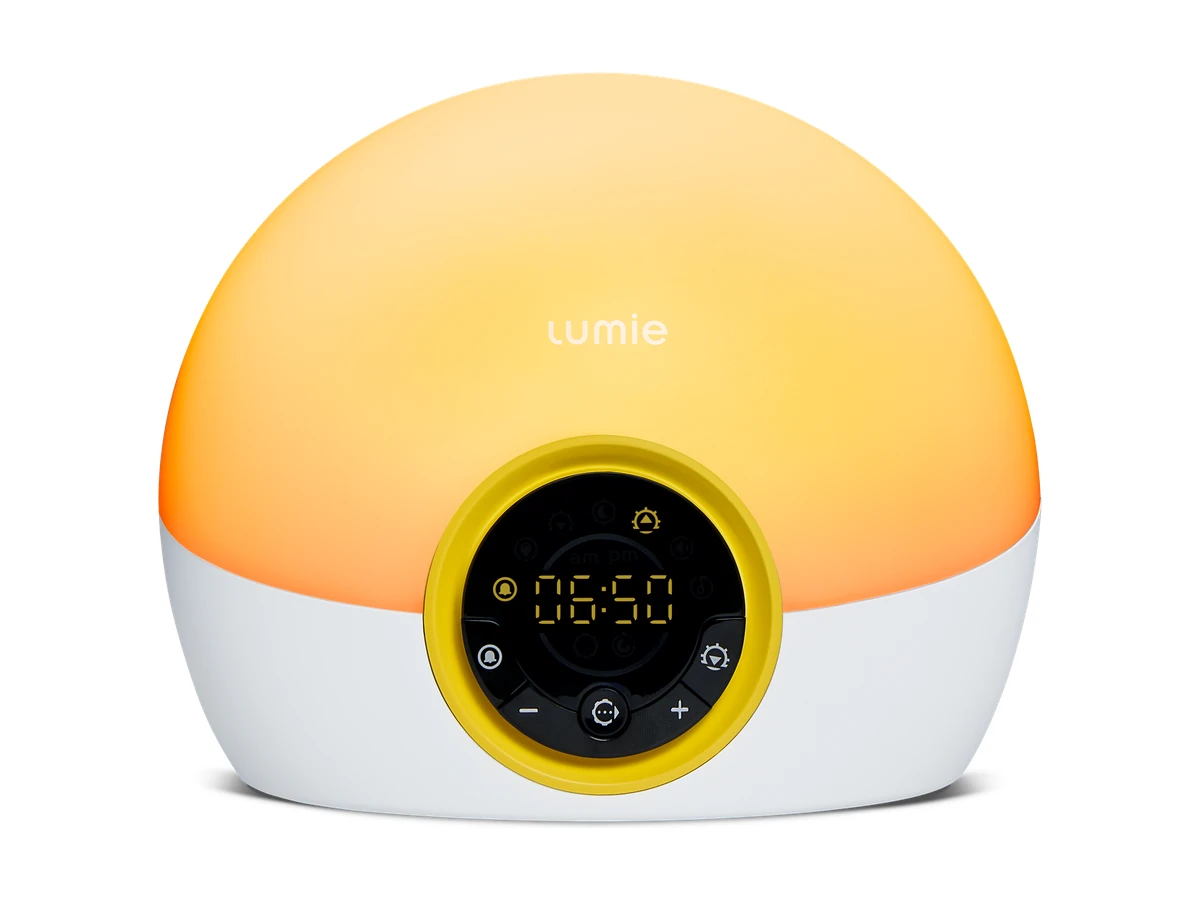
What should your sunrise alarm still do on a morning when your phone is off, your Wi-Fi is down, and every free trial has ended?
If the answer is “run the complete saved light-and-sound wake sequence from controls on the clock,” start with the seven exact models ranked here. Each has a documented core alarm path that needs no paid subscription, app account, or Wi-Fi connection. Six keep their research-based scores from our main Sunrise comparison. Lumie Bodyclock Luxe 700FM uses the same documented-fit method in its published exact-model review and reaches the 8.8/10 research cap.
Hatch Restore 3 and Hatch Sleep Clock can provide core functions without Hatch+, but they still use an app, account, and network for setup or material changes. They are covered separately because “no subscription” is not the same promise as “no app.”
Exact-model documentation and U.S. availability routes checked for the current Sunrise comparison September 1–3, 2026. Scores are research-based, not hands-on measurements.
Buying links may earn TOPCLOCKS a commission at no added cost to you. Retailer availability never changes a model’s editorial score. See our affiliate disclosure.
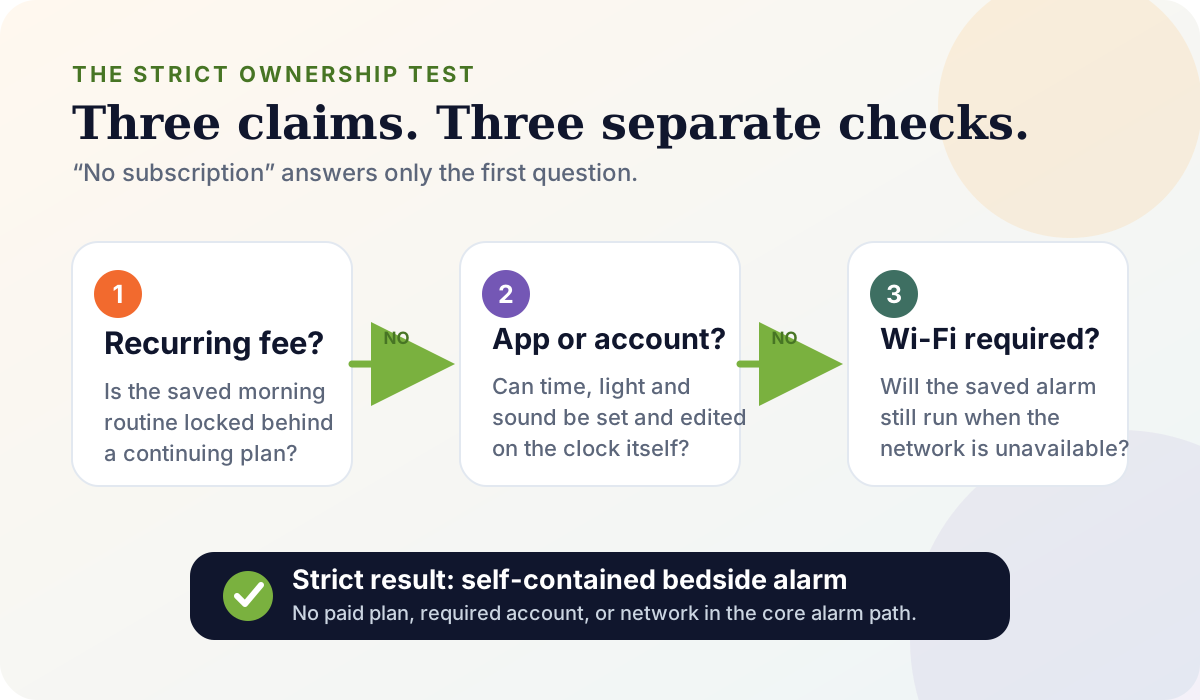
No subscription, no required app, and no required Wi-Fi are three separate buying conditions.
Define the dependency before choosing the clock
“Without a subscription” can describe three different products
1. No recurring paid plan
The alarm’s core light and sound do not sit behind a continuing membership. This is the broadest definition. A clock may pass it while still requiring an app account and a compatible network. Hatch Restore 3 and Hatch Sleep Clock belong in this broad group because their documented core use does not require Hatch+, even though setup is not app-free.
2. No app, account, or Wi-Fi
Time, alarm, light, sound, display, snooze, and stop are set on the clock. This is the strict definition used for the shortlist. Optional Bluetooth playback does not disqualify Lumie Luxe 700FM, ecozy E60A, or Odokee H03 because their core alarm does not depend on that connection.
3. Phone-free after setup
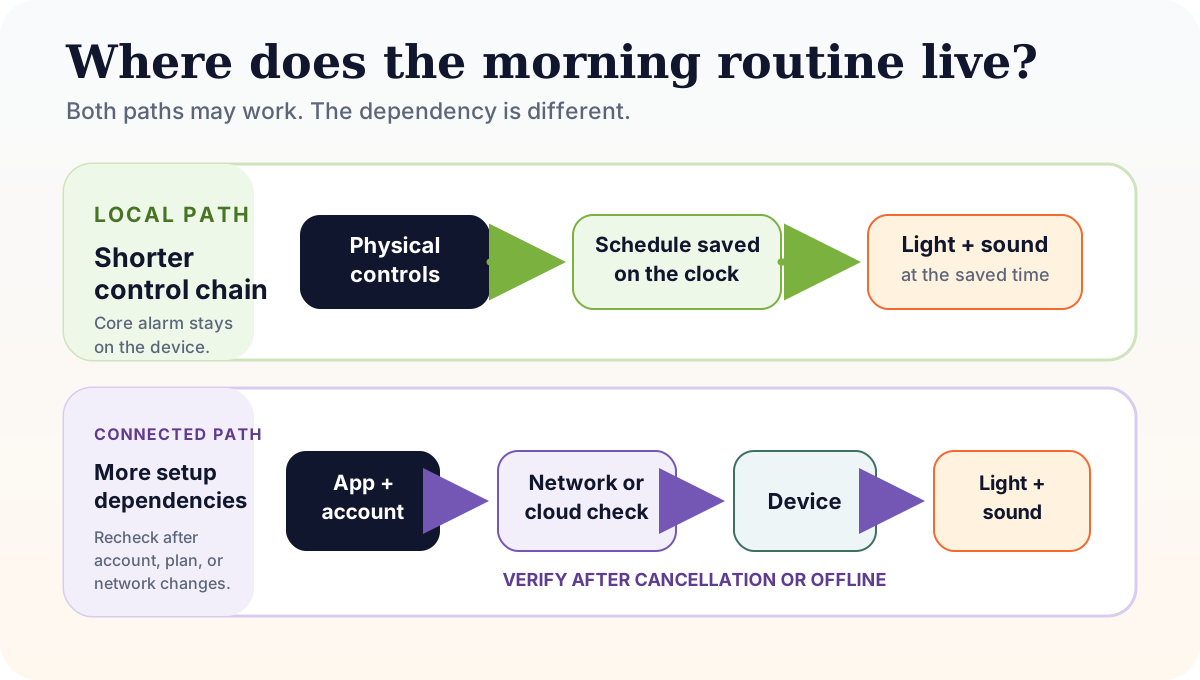
A connected clock can store a routine and offer physical snooze or stop controls after it has been configured. That can make an ordinary morning phone-free, but it does not remove the app from ownership. A later time change, repeat-day edit, account problem, router replacement, or factory reset may bring the phone and network back into the process.
Those categories should not be blended. A buyer trying to avoid another monthly charge may be satisfied with Hatch. A buyer placing a clock in a guest room, limiting phones in a child’s bedroom, or wanting every material setting on the device needs the stricter group. Someone who wants many saved weekday routines may accept app setup in exchange for schedule flexibility. The right answer depends on which dependency is nonnegotiable, not on whether the product page calls the clock “smart.”
A locally saved alarm has a shorter dependency chain. A connected routine can still be useful, but it needs a separate cancellation and offline check.
Decision first
Choose the local function you cannot give up
Two stored alarm profiles
Start with Philips HF3650/60 or HF3520/60. Both document two profiles on the device. Neither documents a weekday calendar, so two stored times do not automatically know which days you work.
Different times on different days
Lumie Luxe 700FM documents a WEEKLY mode that lets the owner switch each day on or off and assign its time using the clock’s controls. That makes Luxe the strongest local weekly-schedule route in this strict set.
Light-only, sound-only, or both
Odokee H03 makes this separation explicit. It also offers a display dimmer that reaches zero, a 5–60-minute sunrise, and 30 final-light levels. The trade-off is one recurring daily alarm rather than multiple schedules.
More app-free light and sound choices
Lumie Glow 150 offers 20-, 30-, or 45-minute sunrise choices, 10 wake choices, and nine sunset sound choices. It remains a one-alarm clock that must be armed for the night.
Weekday or weekend repeat with a smaller control set
ecozy E60A documents one alarm-setting path with daily, weekday, or weekend repeat. Do not turn the support page’s broader “multiple alarms” wording into a promise of two independent alarm banks; the detailed manual does not explain them.
The simplest Lumie routine
Lumie Rise 100 narrows the choices to a fixed 30-minute sunrise and sunset with one optional beep. That simplicity is useful only if its single alarm and nightly arming routine match the household.
One table, seven strict candidates
Compare the best sunrise alarm clocks with no subscription, app, account, or Wi-Fi
This list does not create a second scoring system. Six scores are inherited unchanged from the broader Sunrise comparison. Luxe 700FM’s 8.8/10 comes from its published exact-model review, which applies the same fixed weights for the wake sequence, audible fallback, schedules, control independence, night display, ownership friction, power clarity, and entity evidence. Research-only scores are capped at 8.8 because documentation cannot replace physical testing.
Use the two links in sequence: open the exact-model review first, then use the separate Amazon link only after the model and dependency boundary fit your routine.
Seven current sunrise alarm clocks whose documented core setup is local to the device
Fixed 30-minute red-orange-warm-white sunrise and sunset; one optional beep
Light-sensitive display can fade low or switch off
About 30 minutes of clock-time retention; no documented light or beep while mains power is absent
Simple local light routine with very few choices
Exact-model recommendations
Why each of the seven earns its place
#1 in this list · 8.8/10 inherited score
Philips SmartSleep HF3650/60: the strongest documented self-contained route
Choose the HF3650/60 when local control and a clear failure boundary matter more than app-built weekday schedules. The manual keeps alarm profiles, sunrise, light level, wake sound, FM, display, snooze, stop, and evening functions on the device. Its two wake profiles are useful for storing two times, but an enabled profile repeats daily; the documentation does not turn those profiles into a Monday-to-Friday calendar.
The model has 25 light settings and a published maximum of 310 lux, plus seven wake sounds and FM radio. Treat that illuminance number with its measurement conditions rather than as a promise about every bedroom. Placement, distance, direction, and a partner’s sensitivity still change what reaches the sleeper.
Its power documentation is the clearest in the strict group. Philips states that the internal clock and a short audible backup alarm can remain active for at least eight hours under qualifying outage conditions. That does not mean the lamp performs a full sunrise while unplugged. It means this model documents a limited audible fallback where the others mainly document time or settings retention.
#2 in this strict list · 8.8/10 published review score
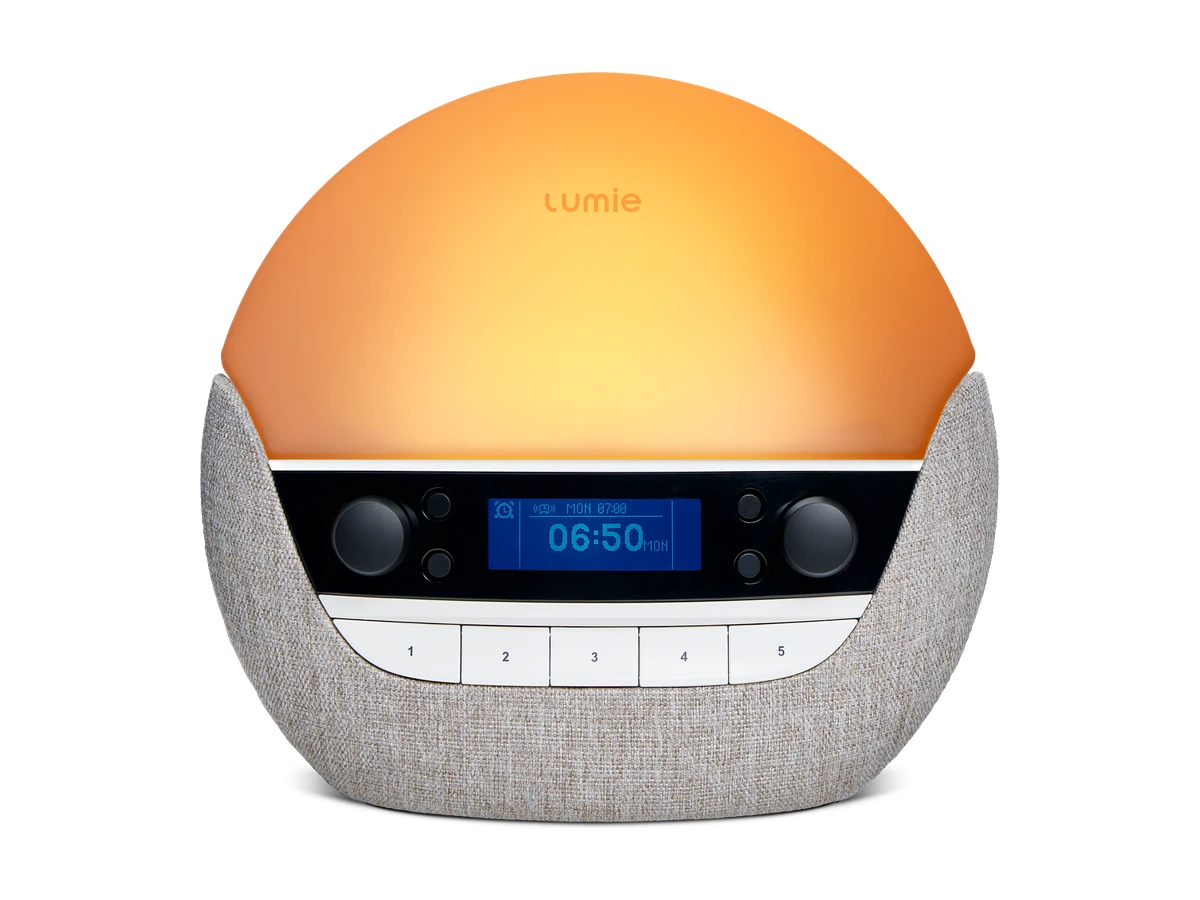
Lumie Bodyclock Luxe 700FM: local weekly scheduling without a phone
Luxe 700FM fills a gap that the first shortlist missed: a current U.S. wake-up light with meaningful per-day scheduling and an entirely on-device setup path. Its manual offers a DAILY mode with one time that is armed at bedtime, plus a WEEKLY mode in which each day can be switched on or off and assigned its own time. Dials and front-panel buttons handle time, alarms, light, display, radio, internal sound, volume, snooze, and sunset settings.
Lumie’s current U.S. page lists a 15–90-minute sunrise and sunset range, adjustable sunrise intensity, 27 internal sleep and wake sounds, FM radio, and Bluetooth speakers. Bluetooth is an optional playback input; the internal sounds, radio, weekly schedule, and light controls do not require an app, account, or Wi-Fi. The light-sensitive display can drop to low or switch off completely when the room is dark, and tap control or a preset button starts a nine-minute snooze.
Its 8.8/10 score uses the same documented-fit method as this guide. Luxe gains ground for its weekly local schedule and broad wake routine, but its manual does not establish a battery-backed wake sequence. It also stores one alarm plan rather than two independent alarm banks, uses a 24-hour display, and has no USB charging output. Those limits make the HF3650/60’s documented audible outage fallback the tie-breaker for first place.
Philips SmartSleep HF3520/60: the classic two-alarm, no-app choice
The HF3520/60 fits a reader who wants a colored sunrise, two alarm profiles, natural sounds, and FM without moving into an app ecosystem. Its documented sunrise runs for 20 to 40 minutes and changes through red, orange, and yellow. The published maximum is up to 300 lux at the stated distance. Five natural wake sounds or FM can join the light at the alarm time.
Both alarm profiles are configured and enabled on the device. That makes the clock suitable for two stored times, not for automatic day-of-week logic. If one profile represents weekdays and the other represents weekends, switching the correct alarm on remains a human task.
The display has levels from off through brighter settings and can respond to room light. During a power interruption, the manual documents clock-time retention for up to eight hours. It does not establish that the lamp or audible alarm will wake you while mains power is absent. The distinction is important if a retailer reduces both behaviors to one word: “backup.”
ecozy Lumo Lite E60A: useful repeat-day logic without an app
The E60A occupies a practical middle position. Its exact manual documents local alarm, light, sound, display, and snooze controls along with daily, weekday, or weekend repeat. That is more schedule help than a single alarm you must arm every night, while avoiding the app account and network needed by the connected choices.
The documented range includes a 0–60-minute sunrise, 20 final-light levels, 22 wake sounds, 16 volume levels, a 5–20-minute snooze, and five display levels including off. A separate 26-track sleep library and optional Bluetooth playback expand nighttime audio, but Bluetooth is not required for the clock’s core alarm.
There is one evidence limit to carry into the purchase. Ecozy support uses the phrase “multiple alarms,” while the detailed exact-model manual explains one alarm-setting path and does not show two independently armed banks. This recommendation relies on the documented path and repeat-day rules. A CR2032 cell preserves settings; the clock, lamp, and sound still need external power.
Lumie Bodyclock Glow 150: a richer app-free Lumie routine
Glow 150 is the Lumie route for a reader who wants more control than Rise 100 supplies without adding an app. It offers 20-, 30-, or 45-minute sunrise choices, adjustable final intensity, 10 wake choices, nine sunset sound choices, five alarm-volume levels, and a nine-minute snooze. Time, light, display, sunset, snooze, and alarm settings stay on the clock.
The auto-dimming display can go fully dark, which matters when “no app” is only one part of the requirement and the bedside clock must also disappear visually overnight. The additional choices do not change its schedule boundary: Glow 150 retains one alarm time and requires the alarm to be armed for the night.
Lumie documents brief clock retention after a power interruption, not a working sunrise or sound alarm while mains power is absent. For a critical morning, pair the clock with a genuinely battery-operated secondary alarm instead of treating retained time as wake protection.
Odokee H03: separate the light cue from the sound cue
Odokee H03 is the most explicit choice here for deciding whether the morning should use light only, sound only, or both. The clock documents a 5–60-minute sunrise, 30 selectable final-light levels, seven wake sounds, 32 volume levels, and a display dimmer that reaches zero. It also includes 25 sleep sounds without requiring an app.
That control range can help a shared bedroom because it lets the owner change the kind of cue rather than simply making every cue stronger. It does not guarantee that light-only will wake a particular sleeper, and it does not turn one daily alarm into a weekday schedule. Use the light-only mode as something to verify during ordinary mornings before depending on it for a deadline.
The H03 uses two AAA cells to preserve settings. Its manual states that the display and alarm do not operate on those cells alone. Optional Bluetooth audio is separate from the built-in clock functions, so a paired phone is not part of the core wake path.
Lumie Bodyclock Rise 100: fewer settings, clear local ownership
Rise 100 is not the choice for sound variety or automated schedules. It is the choice for a fixed 30-minute red-orange-warm-white sunrise and sunset, one optional beep, tap snooze, and on-device control. Its light-sensitive display can fade low or switch off, and the sunset can finish dark or at a night-light level.
The narrow feature set can reduce setup decisions, but it also sets firm limits. The clock stores one alarm time and requires activation before each night. A buyer who regularly alternates early shifts, weekends, and days off may find that repeated manual step more important than the absence of an app.
The manual describes about 30 minutes of clock-time retention and permanent settings retention. It does not promise that the light or beep operates while mains power is absent. Rise 100 therefore suits a simple, ordinary routine, not a requirement for multiple schedules or documented outage alarm output.
Connected choices and one app-free model that remains conditional
Hatch Restore 3 and Hatch Sleep Clock are often relevant to a no-subscription search because Hatch+ is optional for their documented core use. They are not included in the strict seven because an app, account, and network remain part of setup or material alarm changes. ANJANK is also app-led. JALL K6 sits outside for a different reason: its core is local, but exact seller and manual evidence do not agree closely enough for the revised strict shortlist.
JALL K6: app-free, but conditional because the sources conflict
The K6 identified by ASIN B0CHY3GPQ7 offers a locally controlled sunrise, built-in wake and sleep sounds, display-off, local snooze, and optional Bluetooth. The accessible manual lists discrete sunrise choices from zero to 60 minutes, 20 wake-light levels, eight wake choices, and 25 separate sleep sounds. Its documented core does not require an app account or Wi-Fi.
Current seller pages advertise two alarms and FM, while the accessible branded manual shows one alarm-setting flow and contains no FM controls. The seller also describes parts of the sunrise range differently. K6 therefore remains useful exact-model research, but it is not one of the seven strict recommendations. Verify the received controls during the return window and do not buy it primarily for an unresolved feature.
Hatch Restore 3: core sunrise after Hatch+ cancellation
Restore 3 supports app-built sleep and wake routines and selected repeat days. Hatch documents physical controls for routine, light, volume, snooze, and stop after setup. Core sunrise use remains available without an active Hatch+ membership, while the larger content library is tied to Hatch+.
The setup path still includes the Hatch app, an account, Bluetooth, and 2.4 GHz Wi-Fi. A saved routine and physical bedside controls can make daily use phone-free, but changing a schedule is not the same local-control workflow as the strict shortlist. Current official material does not document a complete battery-backed sunrise and sound sequence.
Hatch Sleep Clock: no Hatch+ for core alarm or sleep data
Hatch Sleep Clock adds contactless sleep tracking to a sunrise clock, supports multiple alarms with repeat days, and can keep its display off overnight. Hatch’s current material says Hatch+ expands content but is not required for the core alarm or sleep data.
Alarm records are created and changed in the Hatch app, even though the clock has physical alarm, snooze, and stop controls. Choose it when the combined sunrise-and-sleep-data job justifies app ownership. Do not select it as a strict no-app clock or assume that a hidden display means the whole system is offline.
GlowRise is the route for a buyer who values many saved schedules more than app independence. The exact current record advertises as many as 15 app-managed alarms, five sunrise modes, 10 wake sounds, and physical bedside controls. The advertised schedule advantage depends on app pairing and 2.4 GHz Wi-Fi.
No mandatory paid subscription is established in the exact-model evidence used by the current comparison. That does not make the product app-free, and a stable exact-model manufacturer manual was not verified to the same standard as the Philips and Lumie documentation. Power-loss wake behavior also remains undocumented. Keep those evidence limits visible when comparing its schedule count with a local-control model.
Offline use, cancellation, and power loss are not one test
The phone is unavailable
The strict shortlist keeps material alarm setup on the clock, so a missing phone does not remove the documented control path. Hatch and ANJANK can offer physical actions after setup, but later schedule or routine changes may still require the app. “I can snooze without my phone” is therefore a narrower statement than “I can own and configure this clock without my phone.”
The internet is unavailable
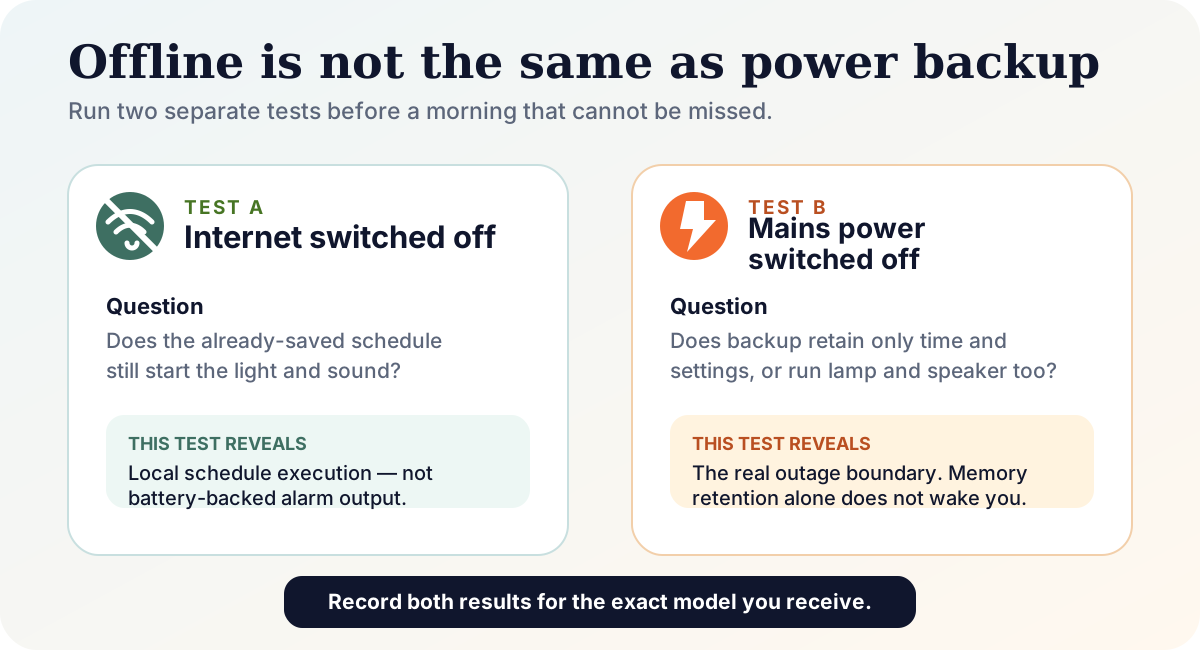
A local clock does not need Wi-Fi for its core alarm, but it still needs the correct saved time, alarm state, and external power. With a connected model, test a saved routine while Wi-Fi is deliberately unavailable; do not infer the whole routine from a successful sound preview or from the presence of physical buttons.
The paid plan is cancelled
For the strict shortlist, no plan is part of the documented core path. For Hatch, cancellation changes the content boundary rather than turning the clock into a local-control product. Before relying on the post-cancellation routine, choose an included light and sound, save a short daytime alarm, and verify the exact sequence that remains available on the account.
Mains power is lost
This is the most consequential and most frequently blurred condition. A battery or internal memory may preserve settings or clock time without powering the lamp, display, or speaker. HF3650/60 documents a short audible fallback under qualifying outage conditions, not a full sunrise. For the other strict candidates, including Luxe 700FM, the cited material does not establish a complete wake output without external power.
Internet loss tests local schedule execution. Mains loss tests whether backup powers the lamp and speaker or merely preserves time and settings.
A genuinely resilient morning uses independent paths. If missing the alarm would create a serious consequence, keep a separate battery-powered alarm even when the sunrise clock has time retention. Two devices on the same outlet are not two power paths, and two alarms inside one app are not two software paths.
Verify before the deadline matters
Run this receipt-window test on the exact clock you receive
Confirm the entity. Match the model number, finish, power adapter, and seller listing to the review. Keep Luxe 700FM separate from Shine 300, Glow 150, and Rise 100. If evaluating the conditional JALL route, confirm K6 and ASIN B0CHY3GPQ7 rather than assuming every similar circular wake light has the same controls.
Set a daytime alarm 15 minutes ahead. Use the normal controls, not a demonstration mode. Confirm the first visible light, the final light level, the chosen sound, and the target time.
Check what “off” means. Turn the clock display to its lowest setting. Verify whether it becomes fully dark, merely dim, or changes automatically with room light.
Rehearse snooze and stop. In a dark room, locate the correct control without navigating an app. Confirm that snooze does not silently disable tomorrow’s alarm and that stop behaves as the manual describes.
Test the schedule boundary. On Philips, verify which of the two profiles is enabled. On Luxe 700FM, verify DAILY versus WEEKLY mode and every enabled day. On ecozy, verify the daily/weekday/weekend repeat choice. On Glow 150, Rise 100, and Odokee, rehearse the one-alarm arming step. If considering JALL, verify whether the received unit truly has two independent alarm banks.
Separate built-in and optional audio. If the clock offers Bluetooth, run the alarm with the phone unpaired. The core wake sound should be a built-in choice, not an accidental streaming dependency.
Inspect retention safely. After noting every setting, disconnect power during the day, then restore it and check time, alarm state, and repeat rules. Do not perform the first outage experiment on a critical morning.
For Hatch or ANJANK, repeat with the network unavailable. Save a short routine first, close the app, disable the relevant network connection, and verify light, sound, snooze, and stop as separate actions. Repeat after any router, account, or subscription change.
Use ordinary mornings to tune placement. Change one variable at a time: clock position, ramp duration, final light, sound, or volume. This shows which change helped without turning the process into guesswork.
This is a verification procedure, not a claim that TOPCLOCKS physically tested the unit in your bedroom. The exact room, sleeper, received revision, and household routine remain outside a documentation-only comparison.
Final choice
Match the model to the requirement, not the number of features
Choose Philips HF3650/60 when you want the most complete documented app-free package in this group and value its limited audible outage fallback.
Choose Lumie Luxe 700FM when different alarm times for individual days, a 15–90-minute sunrise, 27 internal sounds, FM, and optional Bluetooth are more important than a documented audible outage fallback. Its full exact-model review explains the 8.8/10 score and ownership limits.
Choose Philips HF3520/60 when two local alarm profiles, a colored sunrise, five built-in sounds, and FM cover the routine without the HF3650/60’s broader evening functions.
Choose ecozy E60A when weekday/weekend repeat, many built-in wake sounds, display-off, and adjustable snooze matter more than having two clearly documented alarm banks.
Choose Lumie Glow 150 when you want three sunrise durations and more built-in wake and sunset sound choices, and one manually armed alarm is enough.
Choose Odokee H03 when the most important control is light-only, sound-only, or combined waking, especially alongside a display that can dim to zero.
Treat JALL K6 as conditional when the documented local core fits and you are prepared to verify the seller/manual conflicts before depending on two alarms or FM.
Choose Lumie Rise 100 when a fixed 30-minute light sequence, one optional beep, and minimal setup are advantages rather than constraints.
Choose Hatch Restore 3 or Hatch Sleep Clock outside the strict seven when app-built repeat-day routines or sleep tracking are worth keeping an account and network setup, even without a paid Hatch+ plan.
Choose ANJANK GlowRise outside the strict seven when many app-managed schedules are the deciding feature and thinner exact-model documentation is acceptable.
No model here removes the need to verify the morning. “No subscription” eliminates one ownership cost. “No app” eliminates a configuration dependency. Neither statement proves that the light reaches the sleeper, the sound is suitable, the correct alarm is armed, or the unit will operate during a power cut.
Questions before you choose
Sunrise alarm clocks without a subscription: FAQ
Which current sunrise alarm clocks work without an app or subscription?
Philips SmartSleep HF3650/60 and HF3520/60, Lumie Bodyclock Luxe 700FM, Lumie Bodyclock Glow 150, ecozy Lumo Lite E60A, Odokee H03, and Lumie Bodyclock Rise 100 keep their documented core alarm setup on the device. Optional Bluetooth on Luxe 700FM, ecozy E60A, or Odokee H03 does not make it mandatory for the alarm. JALL K6 also has a local core, but remains a conditional candidate because its exact seller and manual evidence conflict.
Does Hatch Restore 3 work without a Hatch+ subscription?
Hatch documents core sunrise alarm functions and included content without an active Hatch+ membership. Restore 3 still uses the Hatch app, account, Bluetooth, and 2.4 GHz Wi-Fi for setup, and material routine changes remain part of that connected workflow. It is no-subscription for core use, not a strict no-app clock.
Does Hatch Sleep Clock require Hatch+?
Hatch’s current material says Hatch+ is optional for the core alarm and sleep data, while expanding available content. The clock still uses the Hatch app to create and change alarms. Physical alarm, snooze, and stop controls do not remove the setup dependency.
Can a sunrise alarm be phone-free but not app-free?
Yes. A connected clock may store a routine and provide physical snooze, stop, volume, or light controls after setup. The morning can be phone-free until you need to change the schedule, reconnect the clock, replace the router, solve an account problem, or set it up again.
Which no-app models store two alarm times?
Philips HF3650/60 and HF3520/60 document two alarm profiles. They do not document automatic weekday selection, so the user still controls which profile is enabled. Luxe 700FM takes another route: its WEEKLY mode can assign a time or no alarm to each day. ecozy E60A documents daily, weekday, or weekend repeat through one detailed alarm-setting path.
Which model can use light without an alarm sound?
Odokee H03 explicitly documents light-only, sound-only, and combined wake modes. Lumie Rise 100 has an optional beep, but compare its one-alarm routine and fixed 30-minute sunrise with the H03’s wider timing and intensity controls before treating those paths as equivalent.
Will any of these clocks run a sunrise during a power outage?
The cited documentation does not establish a complete battery-powered sunrise for the strict shortlist. Philips HF3650/60 documents an internal clock and short audible backup alarm under qualifying outage conditions. Other models mainly document time or settings retention, require their mains adapter, or use backup cells that do not power the display or alarm.
Does optional Bluetooth make a clock app-dependent?
No. On Luxe 700FM, ecozy E60A, Odokee H03, and the conditional JALL K6 route, Bluetooth is an optional audio input rather than a requirement for the documented built-in alarm. Test the core alarm with the phone unpaired so the distinction is real on the received unit.
Why is JALL K6 a conditional candidate instead of one of the seven?
The exact seller page and accessible K6 manual do not describe the same control set. Seller material advertises two alarms and FM; the manual shows one alarm path and no FM controls. That evidence conflict lowers confidence, so this guide does not count the unresolved features or place K6 in the strict seven.
Is a no-subscription sunrise alarm automatically the cheaper choice?
No. “No subscription” describes the absence of a recurring paid plan for the core alarm. It does not determine the purchase price, current discount, replacement cost, power-adapter availability, or how long a particular unit will remain useful. Compare ownership requirements separately from volatile price.
Editorial limit: this is a documentation-based buying guide. It does not report hands-on testing, treatment outcomes, current prices, star ratings, or guaranteed stock. Availability routes and software terms can change; recheck the exact model and current service terms before purchase.